The personalization of a gift is no longer just about engraving a name on a mug. Printing techniques, available materials, and formats have evolved enough for personalized gifts to become meaningful objects, provided one goes beyond the default options offered by most platforms.
Personalization techniques to master before ordering
The choice of technique determines the durability of the result and the type of usable support. Embroidery remains the most durable method for washing textiles, far ahead of sublimation printing, which fades after a few dozen cycles. On an accessory worn daily (scrunchie, fanny pack, socks), this difference becomes apparent within a few months.
Laser engraving, on the other hand, is ideal for hard materials: wood, glass, metal, leather. It provides a clean result without added thickness but limits the palette to monochromatic shades. For jewelry or keychains, this is the standard. For a color visual, one must switch to flat UV printing, which is more versatile but reserved for flat surfaces.
We recommend systematically checking three points before any order: the minimum resolution accepted for a photo file (often underestimated for small formats), the actual number of printable characters (a message that is too long will be truncated or reduced to microscopic size), and the effective personalization area, which almost never covers the entire object.
Personalized textile accessories: beyond the tote bag
Lifestyle textile accessories have taken over from traditional promotional goodies. The personalized fanny pack and message socks are among the most requested formats in the past two years, driven by their daily visibility and accessible price.
The printed scrunchie follows the same logic: a worn, visible accessory that incorporates a short text or a design chosen by the buyer. What distinguishes a successful gift from a gadget forgotten in a drawer is precisely this “wearable” dimension. A personalized item that the person uses every week has more perceived value than a photo frame sitting on a shelf.

To identify accessories that combine careful personalization and real use, we recommend visiting the 10 Grammes website, whose catalog focuses on pieces designed to be worn or used regularly.
The main selection criterion remains the quality of the base textile. A cotton that is too thin does not hold up well to raised printing, and low-quality polyester gives a plastic feel to the touch. On personalized socks, the weight and composition (combed cotton, Scottish yarn) make the difference between a durable product and a disposable one.
Personalized gifts by interest: the micro-community logic
The most impactful personalization does not rely on a name, but on a reference understood only by the recipient. Several shops now structure their offerings by very specific passion universes: tennis, running, gaming, cooking, wellness.
The principle: to incorporate on the object a text, a visual, or an inside joke specific to the recipient’s community. A tennis vibration dampener engraved with a quote that only a regular player will understand has more emotional impact than a generic “best tennis player” mug.
- Identify the recipient’s main passion and look for specialized shops in that universe, not generalist platforms
- Favor a text or visual that references a shared moment, an internal nickname, or a code from the field
- Ensure that the object’s format corresponds to real use in that practice (water bottle for sports, case for gaming, apron for cooking)
This approach requires additional research effort, but a gift rooted in a specific universe generates a much stronger reaction than a superficially personalized item.
Personalized workshop kits: when the gift becomes an experience
The personalized gift is no longer limited to a physical object. Workshop kits (pottery, perfume, ceramics, matcha) now include a layer of personalization: choosing the workshop based on the recipient’s tastes, accompanied by a small engraved or printed accessory with their name.
The interest of this format lies in the dual perceived value. The recipient receives an experience chosen for them, not a generic exchangeable voucher. And the accessory that accompanies the kit (mug, apron, notebook) extends the memory of the workshop over time.
We observe that the most successful kits combine a personalized object and a targeted experience, rather than offering a catalog where the recipient chooses for themselves. The selection work is part of the gift.
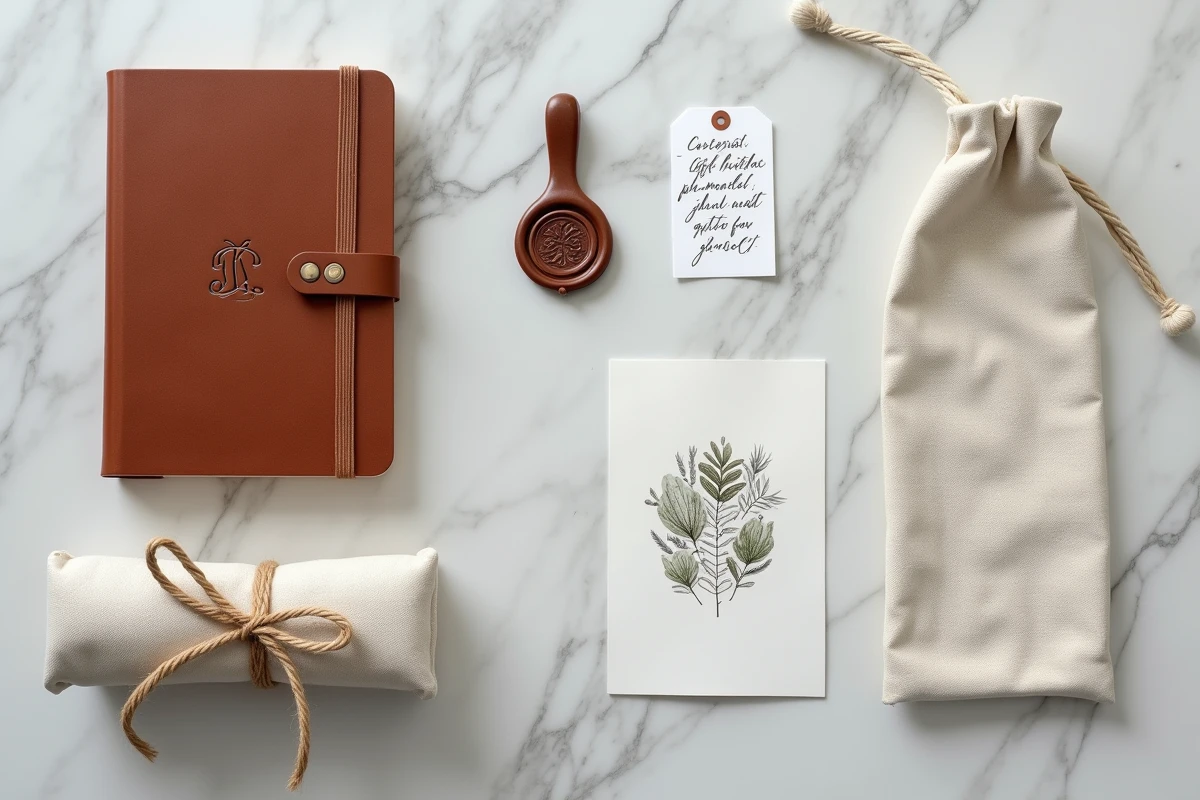
Common mistakes in photo personalization
Printing a photo on an object seems simple. In practice, it is the category that generates the most disappointments. The resolution of the source file is problematic in most cases: a photo sent via messaging has already been compressed, and the result on a rigid support (phone case, puzzle, board) will be pixelated.
Another pitfall: automatic cropping. Most platforms apply a default crop that cuts off the edges of the image. On a group portrait, the people on the sides partially disappear. One should always use the preview tool and, if possible, send a file in original resolution, uncropped.
- Use the original photo stored on the device, not a version shared via social media or messaging
- Check the ratio of the support (square, 4:3, 16:9) before choosing the shot
- Avoid photos taken in low light: dark areas turn into uniform black when printed
A successful photo gift depends more on the source file than on the chosen platform. Investing two minutes in selecting the right shot avoids a disappointing result on a product that was perfectly suited.
The most memorable personalized gift is not the one that displays the most text or the largest photo. It is the one where every detail, from the support to the technique to the message, has been thought out for a single person. Surface personalization (name + favorite color) is gradually giving way to deeper personalization, rooted in the recipient’s passions and codes.