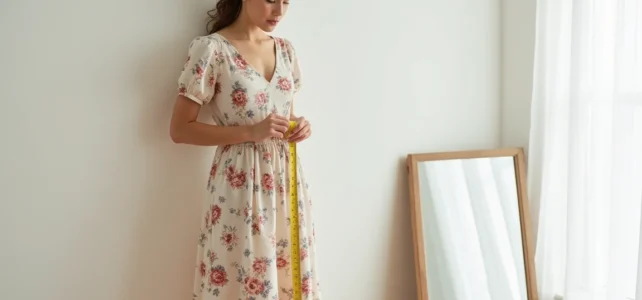
The length of a dress is measured in centimeters from a specific reference point on the upper body, usually the hollow of the collarbone, down to the bottom edge of the hem. This measurement does not start from the neckline of the garment or the shoulder, two common mistakes that can distort the result by several centimeters. Knowing how to take this measurement correctly avoids unpleasant surprises when receiving an online order or during a fitting.
Dress length and fabric behavior: what the flat measurement doesn’t reveal

A tape measure laid flat on a dress gives a value in centimeters. When worn on the body, the same dress may appear shorter or longer depending on the material. Tailoring workshops adjust the length differently depending on whether they are working with heavy crepe, stiff satin, or fluid chiffon, because the drape of the fabric alters the perceived length.
A thick crepe falls straight and retains roughly the length measured flat. Lightweight chiffon, on the other hand, lifts with the slightest movement and rises a few centimeters at the sides. Stiff satin can create a volume effect that visually shortens the silhouette.
Before fixing a hem or validating a size online, it is useful to consult a guide for measuring dress length that takes these variables into account. The fabric of the dress should always guide the length margin to be anticipated.
Measuring the length of a dress with a tape measure: method and reference points

The necessary equipment is limited to a flexible measuring tape and, ideally, a second person to hold the tape straight at the back. A rigid DIY tape measure does not conform to the curves of the body and introduces errors.
Starting point: the hollow of the collarbone
The standard reference point is the hollow located between the two collarbones, at the base of the neck. Place the end of the tape at this point, then let it drop vertically down the bust to the desired hem height. This measurement is called the hollow-hem (or “hollow to hem” in international guides).
Note: measuring from the shoulder distorts the result, as the shoulder-to-collarbone distance varies from one body type to another. The hollow of the collarbone is a stable bony landmark, identical regardless of body shape.
Posture and shoes during measurement
Posture directly influences the result. Stand up straight, feet together, arms relaxed along the body. Two often-overlooked precautions:
- Take the measurement in underwear only, to avoid the thickness of another garment shifting the starting point of the tape.
- Measure barefoot if the dress will be worn with flat shoes, or with the intended shoes if they have a heel, since a few centimeters of heel change the distance to the ground.
- Repeat the measurement two to three times to confirm the result, repositioning the tape each time.
The height of the heel changes the usable length of the dress. A perfect midi dress in sneakers can become too short with several centimeters of heels, and vice versa.
Measurement for online purchase and measurement for alteration: two different logics
Size guides on retail websites generally require body measurements: bust, waist, hip circumference, and sometimes total height. These values are used to select a size from a standardized chart. The dress length indicated on the product sheet corresponds to a theoretical length for a reference height.
In alterations, the logic is reversed. The workshop works on the dress already in hand. The tailor does not ask for the hollow-hem measurement of the body, but rather the exact value of the hem to be removed or added. The common method is to try on the dress with the intended shoes, then mark the desired length with pins directly on the fabric.
This distinction explains why a measurement taken alone at home to order online is not always sufficient to achieve a perfect fall. The chart on the site may differ from the actual fit on your body shape, especially if the dress is made of fluid fabric.
Check the length of a dress in motion, not just standing
Most fittings are done while standing still, facing a mirror. However, professional tailors recommend checking the length in real-life situations before permanently fixing a hem. Three simple movements reveal problems that a static posture can mask:
- Walk a few steps: a long dress can catch underfoot or sweep the floor excessively.
- Step up a stair (or simulate with a low stool): the fabric lifts at the front and may expose more leg than expected.
- Sit down: the dress rises on the thighs, sometimes significantly, especially with a straight cut or slippery fabric.
A dress that seems perfectly fitted while standing can become uncomfortable or unflattering in motion. Testing the length while walking and sitting avoids unpleasant surprises after alterations.
Adjust the margin according to use
For an evening dress primarily worn standing or sitting at a table, a hem that brushes the floor with the intended shoes works. For an everyday dress, allowing a few centimeters above the ankle enables comfortable walking. The ideal length depends as much on the occasion as on body shape.
The last point to keep in mind: size charts vary from one brand to another, sometimes significantly. A size M from one manufacturer does not always correspond to the same dress length from another. Systematically comparing the measurements in centimeters indicated on the product sheet, rather than relying on the size letter, remains the most reliable method to choose the right dress length without a physical fitting.