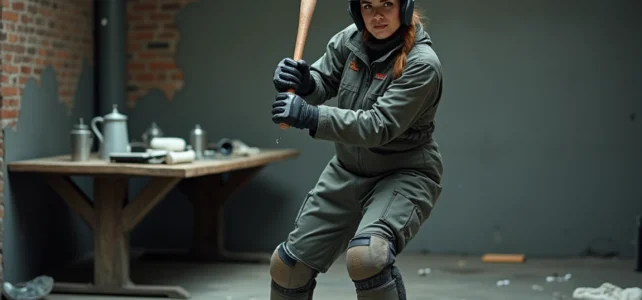
Break rooms have been multiplying in France for a few years, and Lyon now has several locations dedicated to the controlled destruction of objects. The principle remains simple: enter a equipped room, grab a bat or a sledgehammer, and smash dishes, screens, or electronic devices. Behind the spectacular aspect, the fury room in Lyon raises questions about its therapeutic limits, environmental impact, and actual safety framework.
Fury room and mental health: what professionals say
The main marketing argument for break rooms is based on stress relief. Breaking objects is said to provide immediate relief, a form of physical catharsis. This promise deserves to be examined.
Psychologists and psychiatrists interviewed by health-focused media remind us that rage rooms are not a therapy. The relief felt after a session is real but temporary. It resembles more of an adrenaline rush than a deep work on the mechanisms of stress or anxiety.
Some professionals go further by pointing out a risk: reinforcing the idea that physical destruction is an appropriate response to frustration. For individuals suffering from anxiety disorders or difficulties managing anger, this repeated association could prove counterproductive. The available data does not allow for a definitive conclusion, but caution is advised for anyone considering the fury room as a substitute for psychological support.
However, the activity retains its interest as a one-time and playful experience. Physical release provides immediate pleasure, comparable to an intense workout, without therapeutic pretensions.
Before booking a fury room in Lyon Capucins, it may be useful to clarify one’s motivation: seeking a unique moment of relaxation with friends has nothing to do with trying to address chronic discomfort.
Recycling and origin of broken objects in break rooms
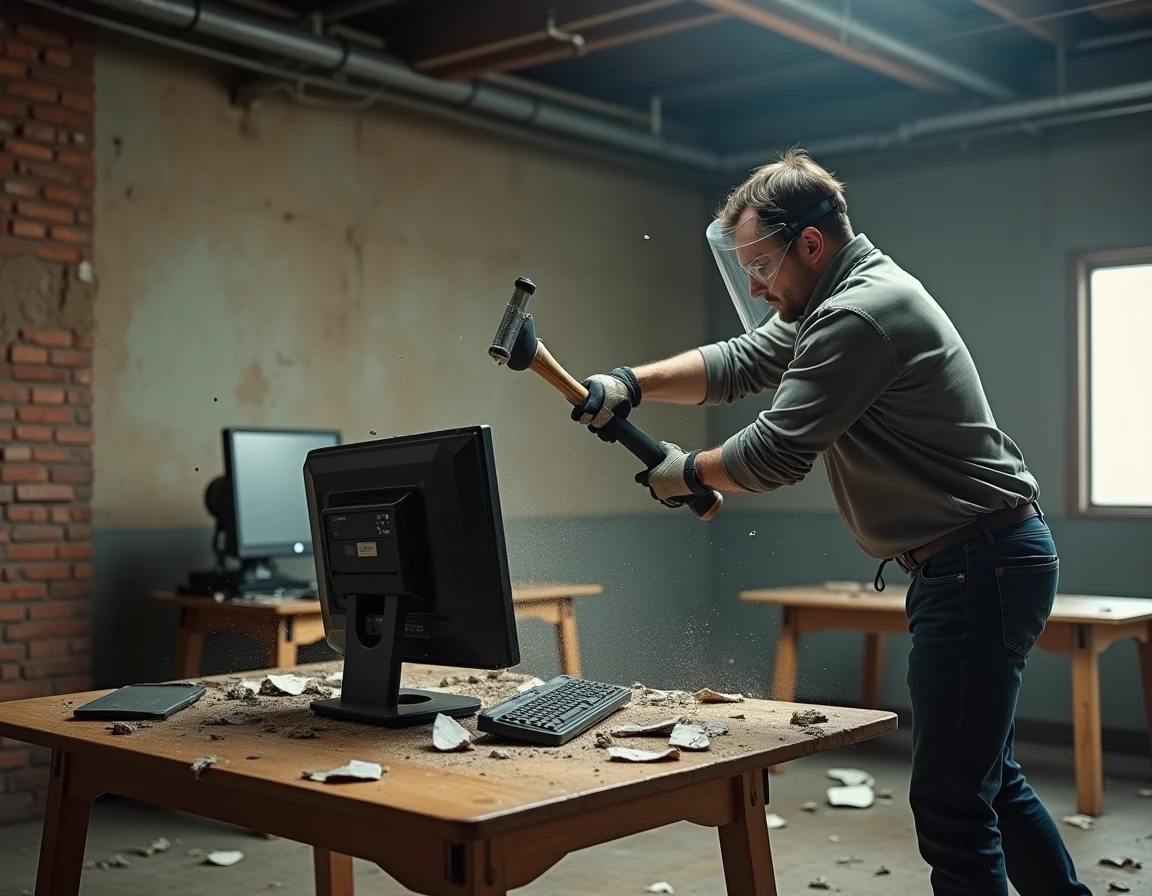
The most frequent criticism directed at fury rooms concerns waste. Deliberately destroying functional objects raises a legitimate environmental question. Several French rooms have started to address this.
The objects offered for destruction mostly come from recovery channels:
- Donations from individuals or businesses (mismatched dishes, small appliances out of order, furniture intended for the dump)
- Recovery of end-of-life electronic waste, already removed from the reuse circuit
- Glass bottles and restaurant glassware collected from professionals
After each session, the debris is sorted by material (glass, metal, plastic, electronic components). Rooms that communicate about their approach direct these flows to appropriate channels, notably the WEEE channel for electronic equipment.
This operation does not resolve the entire issue. Some broken objects could have been donated to reuse associations rather than destroyed. However, a large part of the stock comes from equipment already deemed unrecoverable. The line between reuse and destruction remains blurred, and practices vary from one room to another without uniform labeling or external control.
Safety in the fury room: equipment and supervision on site
The safety framework constitutes the foundation of the activity. Without it, a break room would be an accident-prone area. In Lyon, as elsewhere, the protocol follows a fairly standardized pattern.
Each participant receives complete equipment before entering the room: protective suit, reinforced gloves, helmet with full visor, and safety shoes. Wearing the entire outfit is mandatory throughout the session. No personal items are allowed in the break room.
Reservation is systematically required, which helps control the number of simultaneous participants. Rooms generally impose a minimum age (often accompanied by parental consent for teenagers). A briefing precedes each session to remind participants of the rules: allowed striking zones, distance between participants, expected behavior.
Points of caution before booking a session
- Check that the room provides all necessary protective equipment (some low-cost packages may skimp on this point)
- Ensure the presence of a supervisor or active monitoring during the session, not just a camera
- Ask if a safety briefing is provided beforehand, especially for a first visit
- Check cancellation conditions and any medical restrictions (joint issues, heart problems, pregnancy)
Field feedback varies on the actual level of supervision. Some rooms maintain constant human presence in the room or just nearby, while others rely solely on video surveillance. The quality of supervision varies by establishment, and no specific certification for the sector exists to date in France.
Fury room in companies: between team building and QVT approach
Lyon’s break rooms offer packages dedicated to companies, generally positioned as team-building activities. The principle works: breaking objects together creates a shared memory, a form of complicity through the absurd.
Since the rise of quality of life at work (QVT) and the prevention of psychosocial risks after 2020, some B2B players are trying to reposition rage rooms as tools within a broader framework. Interventions by coaches or psychologists before or after the session are sometimes included in the offers.
A break session does not replace a structured prevention plan. While the activity can serve as an entry point to address workplace stress, it remains a one-time moment. Companies that integrate it into a broader QVT approach (with diagnosis, follow-up, support) derive more value than those that use it as an isolated recreational activity.
The fury room in Lyon meets a desire to let off steam in a controlled environment, and this promise is fulfilled. What varies from one establishment to another is the seriousness of the safety protocol, transparency about the lifecycle of the destroyed objects, and honesty about the real effects of the experience. Three criteria that deserve to be checked before choosing a room.