
A cordless circular saw is rarely chosen based on its marketing specifications alone. The Ryobi R18CS-0, part of the ONE+ 18 V range, features a 165 mm blade and a stated cutting depth at 90°. One detail often missing from quick comparisons is its actual bevel-cutting capacity, which determines whether the tool is suitable for angled cuts in thick panels or framing timber.
Bevel cutting depth: the factor the spec sheet alone can’t settle
Most product pages highlight the maximum cutting depth at 90°. This gives an idea of the machine’s raw capacity, but it doesn’t show what happens as soon as you tilt the base plate.
With a 165 mm circular saw, cutting depth drops significantly at a 45° bevel. Compared with a straight cut, this can mean losing several millimetres of cutting capacity. For a thin sheet of plywood, the difference is inconsequential. For a softwood board over 40 mm thick or a roof batten, it can be a deal-breaker.
Before buying, measure the maximum thickness of the pieces you expect to cut most often, then compare that measurement with the bevel cutting depth of the model you’re considering—not its 90° cutting depth. This simple step can save you a trip back to the store. For the detailed specifications of the Ryobi R18CS-0 circular saw, the available angle settings are listed on the product page.
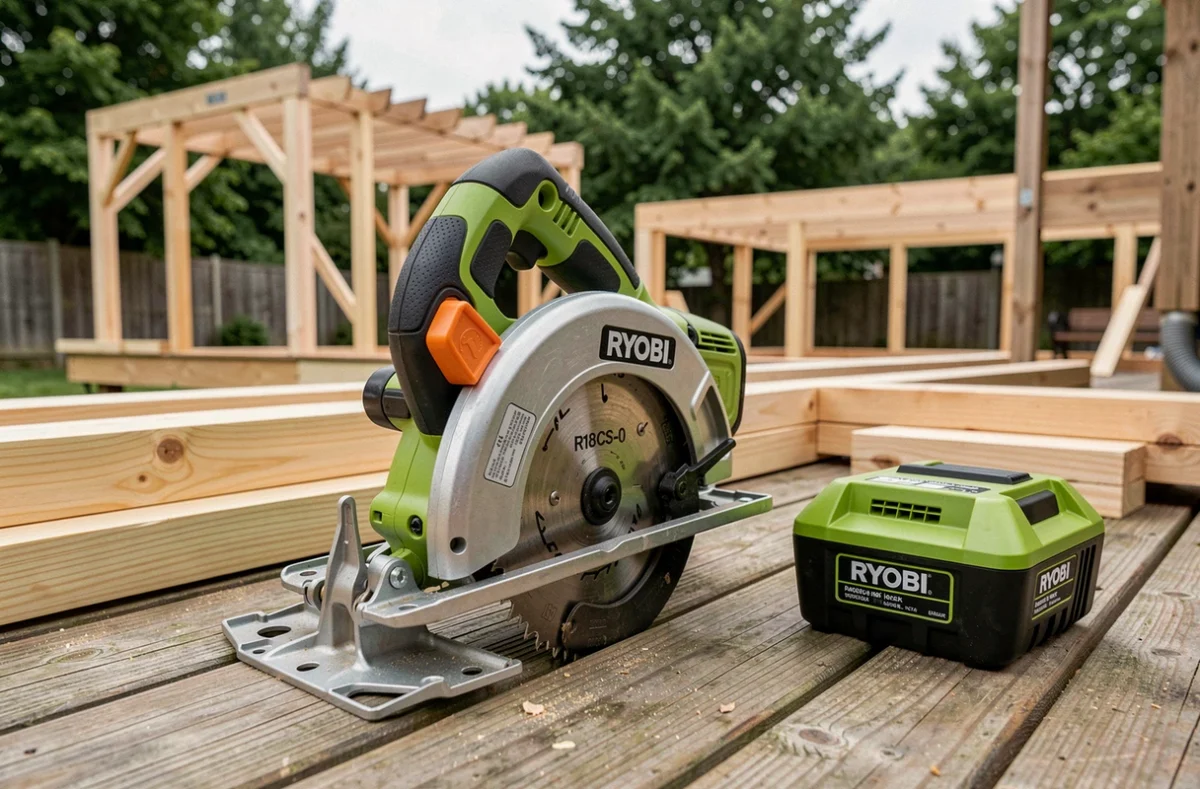
Ryobi R18CS-0 vs. the ONE+ HP range: technical differences at a glance
Ryobi’s catalogue also includes the RCS18X1-0, a ONE+ HP circular saw fitted with a brushless motor. Comparing the two helps put the R18CS-0 in the context of the brand’s current range.
| Feature | R18CS-0 (ONE+) | RCS18X1-0 (ONE+ HP) |
|---|---|---|
| Battery platform | ONE+ 18 V | ONE+ 18 V |
| Motor type | Brushed | Brushless |
| Blade diameter | 165 mm | 165 mm |
| Intended use | Occasional to regular cutting | Heavy use, repeated jobsite work |
| Battery included | No (bare tool) | No (bare tool) |
Both models use the same battery platform, so their batteries are interchangeable. The main difference is the motor. A brushless motor generally offers better energy efficiency and a longer-lasting drive mechanism.
No independent comparative test has been published to quantify the performance gap between these two saws under identical conditions. Without an independent comparison, the choice comes down to the intended use: for occasional cuts in panels or softwood, the R18CS-0’s brushed motor is a sensible choice. For intensive use or hardwood, the brushless version is worth considering.
The real cost of getting started with the ONE+ 18 V platform
The R18CS-0 is sold as a “bare tool”, without a battery or charger. This suits users who already own other Ryobi ONE+ tools and have compatible batteries.
For a first purchase in the ecosystem, the actual budget must include a battery and charger. The listed price of the saw alone therefore represents only part of the investment needed to get started. Ryobi states this in its catalogue, but the information is often easy to miss on retailer pages that highlight the tool’s individual price.
- A ONE+ 18 V battery and charger kit adds to the cost of the saw, and the price varies depending on the battery capacity you choose (higher-capacity models cost considerably more)
- ONE+ batteries are compatible with the entire Ryobi 18 V range, making the investment more worthwhile if you plan to buy other tools (drill, sander, blower)
- Promotional offers sometimes include a saw, battery and charger as a bundle, so keep an eye out during seasonal sales
Price comparison sites list the bare-tool R18CS-0 at varying prices depending on the retailer and time of year. Price differences between retailers can exceed €10 for the same new product, so it’s worth checking several sites before placing an order.
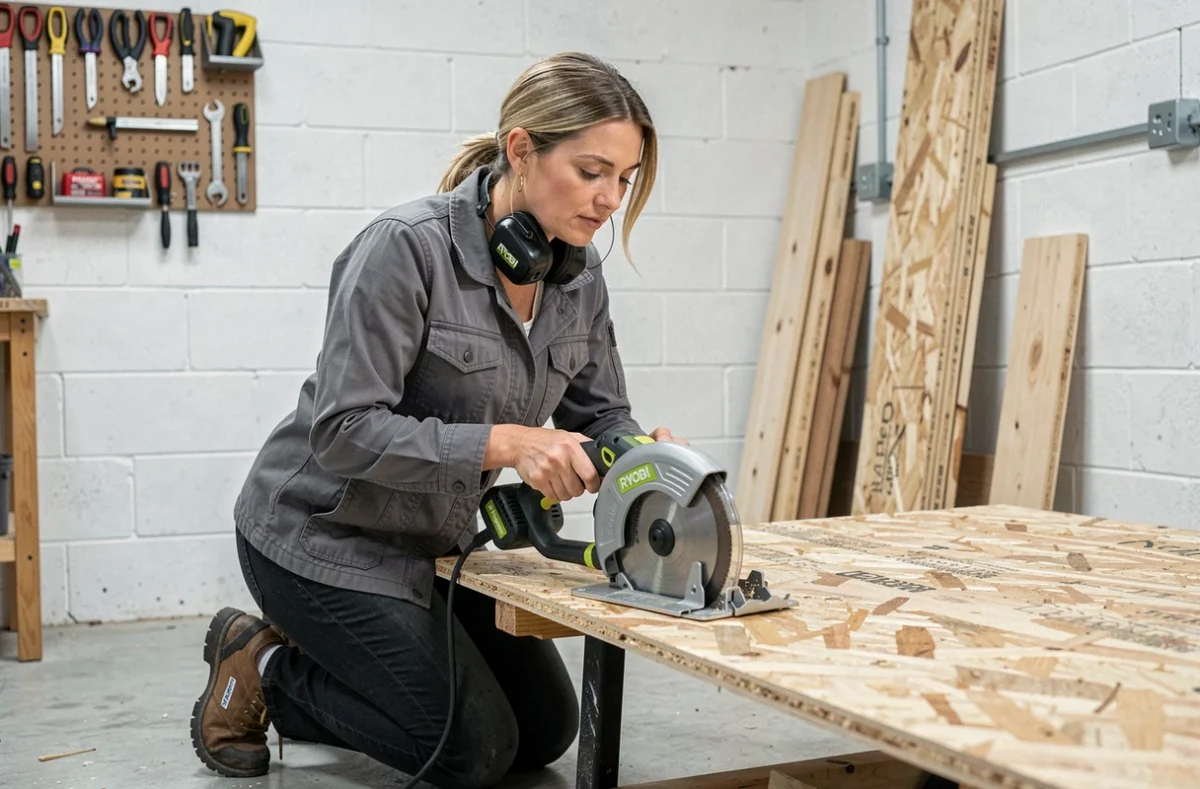
Warranty and purchase terms: what depends on the retailer
Ryobi outlines a warranty policy for its power tools. The exact duration and terms vary by market and sales channel.
A purchase from an authorised retailer in France does not automatically come with the same terms as a purchase from a foreign website or marketplace. Warranty coverage depends on the seller and the receipt, not just the logo on the tool. Check the retailer’s terms and conditions, make sure you receive a valid invoice, and review the returns policy before buying.
165 mm blade and replacement options
The R18CS-0 uses a 165 mm blade, a common size for portable circular saws designed for wood. Replacement blades in this diameter are available with a range of tooth configurations:
- Alternate-top-bevel blades for fast cuts in softwood and particleboard
- Fine-tooth blades (48 teeth or more) for clean cuts in plywood or MDF
- Multi-material blades for occasional cuts in PVC or laminate
Matching the blade to the material has a direct impact on cut quality and motor load. An unsuitable blade makes the saw work harder, reduces battery runtime and causes splintering along the edges.
The R18CS-0 is a good fit within the Ryobi ONE+ ecosystem for everyday cutting tasks in wood and wood-based materials. Before buying, the key question isn’t the brand or design, but whether the saw’s actual bevel cutting depth matches the thickness of the materials you regularly work with. This detail, rarely covered on product pages, can make the difference between a satisfying purchase and a saw that falls short.