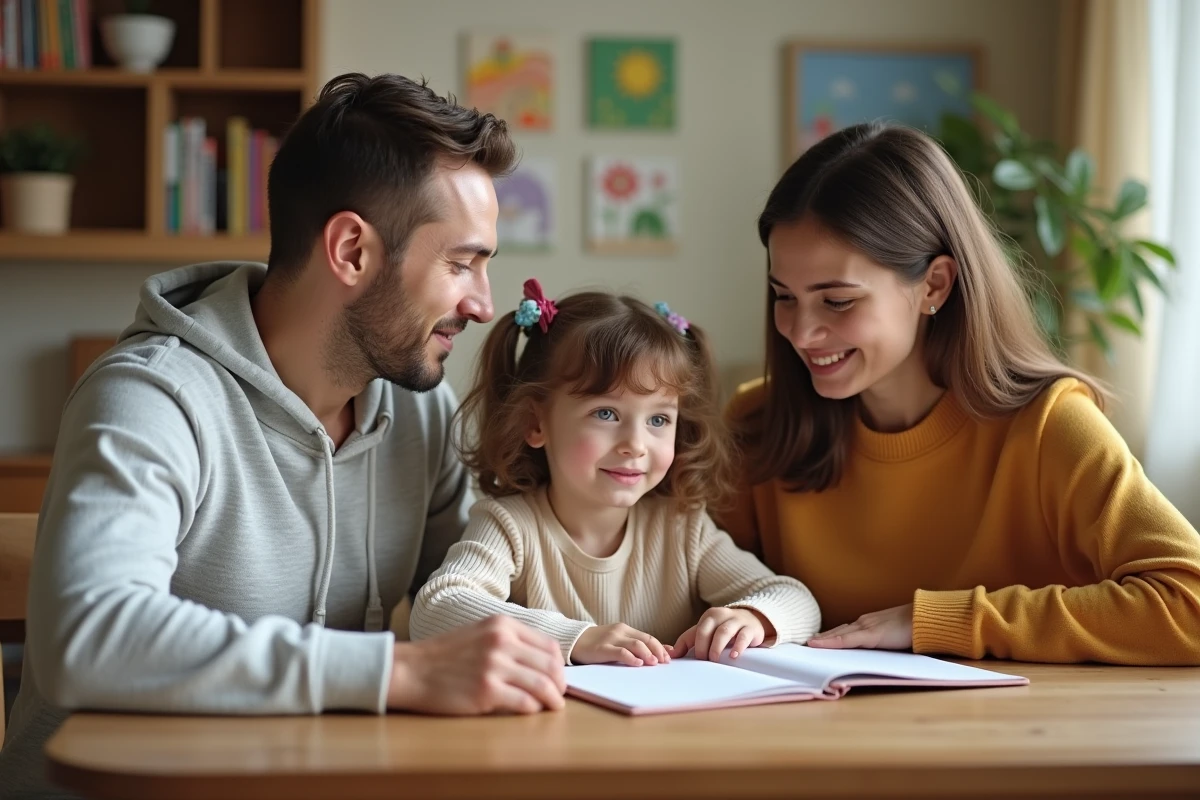
A child does not always conform to expectations, even after repeated and clear explanations. The educational principles that are often cited as examples sometimes clash with the complexity of reality: unexpected events, unique family contexts, expert recommendations that can sometimes produce the opposite effect of what is intended.
Scientific benchmarks on parental support are constantly shifting, calling into question methods that were believed to be reliable just yesterday. Adapting requires staying curious, daring to test, with the humility to accept that the result will not be immediate.
Why positive parenting changes the lives of families
Educating today is no longer about mechanically transmitting what one has received. Parental models are being reinvented, questioning their foundations, and taking on plural forms. Advances in psychology and neuroscience open new perspectives for supporting childhood. Positive education is less of a miracle solution and more of a demanding commitment: combining kindness with firmness, prioritizing genuine communication, and establishing respect as a solid foundation for family bonds.
When positive discipline takes precedence over a power struggle, the child gains autonomy, learns to name their emotions, and speaks up without fear of being judged. Parents, for their part, seek this balance point between the authority that reassures and the freedom that allows each person to assert themselves, between transmitting values and welcoming individuality. The reform of parental leave in 2021, which allowed fathers to spend more time with their children, symbolizes this evolution: supporting a child is no longer the responsibility of one person alone, but of the family collective.
The site parents-infos.com highlights these new benchmarks and this desire to act without violence or renunciation, to weave lasting bonds of trust.
Here are three concrete pillars that emerge from this approach:
- Prioritize active listening, even in moments of tension
- Highlight the effort made, rather than the performance
- Consider each mistake as a useful step in learning
Contemporary parenting breaks free from rigid roles, encourages gender equality, and distributes the educational load. Positive education is not an unattainable ideal, but a possible daily reality for those who question their legacy in order to support their children differently.
What attitudes promote trust and development in children?
Children observe everything, reproduce, and absorb what happens at home. The parent-child relationship is built on the quality of presence and listening. The adult, through their way of being, establishes self-confidence: valuing effort, welcoming failure without stigmatizing, recognizing each small step.
Learning to manage emotions becomes central. A parent who dares to express their own fears, who regulates their reactions, sets an example: here, it is possible to express needs without shame. Kind communication does not eliminate boundaries; it clearly establishes them, taking into account age and situation. When rules are explained and discussed, the child understands the meaning of the framework and no longer feels subjected to it. Banning comparisons allows everyone to progress at their own pace, building a solid self-esteem shaped by parental perception over time.
To establish these benchmarks, here are five attitudes to cultivate:
- Make mistakes a driver of learning
- Prioritize empowerment over punishment
- Adapt educational posture according to the stage of development
- Encourage autonomy through accessible tasks
- Value the expression of emotions and needs
Positive discipline does not aim for submission, but for adherence. It invites growth together, in an atmosphere of respect and mutual trust. This support work is reinvented day by day as the child evolves in their needs, desires, and challenges.

Concrete advice for practicing kindness in daily life
Practicing kindness, at the heart of parenting, is not innate. It is learned, built through everyday gestures and continuous reflection on one’s posture. Parents who commit to this path realize that each day brings its share of opportunities to strengthen cooperation and establish a climate of trust. Involving the child in setting up routines, defining rules together, and including them in household life are all concrete ways to develop their autonomy and sense of responsibility.
Rephrasing during conflicts changes the game. Restating in one’s own words what the child expresses, without judgment, assures them that their voice matters. This technique, validated by psychology and neuroscience, facilitates a peaceful resolution of tensions. In daily life, active listening becomes a bulwark against withdrawal or bullying: a silence, an unusual attitude, a half-hearted word—all deserve attention and open the door to conversation.
Here are some practices to implement to strengthen family kindness:
- Structure the management of family routines to reassure and provide benchmarks
- Encourage decision-making by allowing the child to choose between two age-appropriate options
- In case of a crisis, maintain a calm voice, offer a reassuring look, and let the emotion pass before acting
Supporting the child in their school journey means walking alongside them, valuing intrinsic motivation. Specialists like Isabelle Filliozat or Maria Montessori have demonstrated this: giving meaning to learning and recognizing effort allows everyone to thrive and find their place.
Growing with your child means accepting to learn yourself, to question yourself, to move forward on a path where each progress, each clumsiness, enriches the relationship. Tomorrow, these gestures and this attentive listening will shape confident adults, capable in turn of daring, asserting themselves, and passing on the momentum received.