What concrete choices distinguish a successful contemporary interior from a hodgepodge of fleeting trends? Modern decoration is now measured against specific criteria: materials, modularity, light management, color palette. This article reviews ten interior decoration techniques that truly alter the atmosphere of a room, comparing their visual impact, relative cost, and durability.
1. Matte finishes and irregular textures on walls
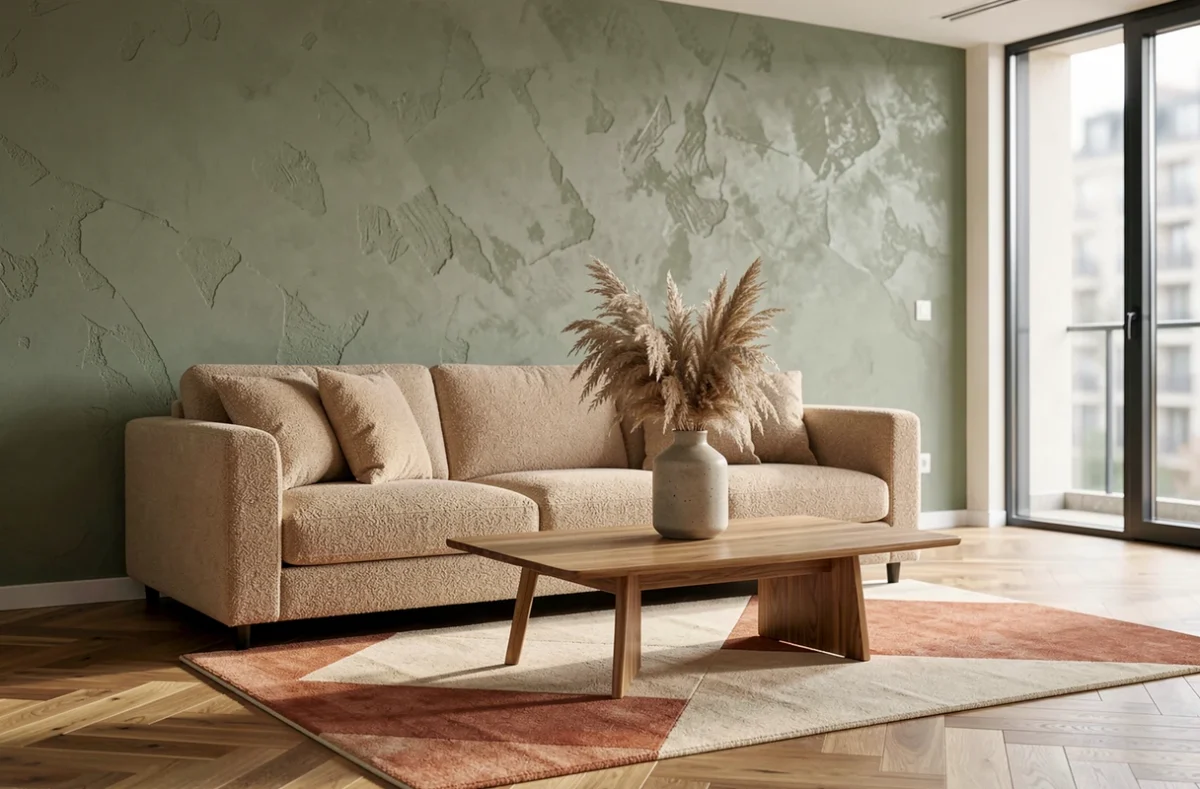
Shiny, smooth surfaces are giving way to matte finishes with a raw effect: lime plaster, polished concrete, textured wash. These treatments absorb light instead of reflecting it, reducing glare and creating visual depth in both the living room and the bedroom.
The irregular finish adds a handcrafted character that standard satin paint does not replicate. The downside: matte finishes show marks more easily, and their maintenance requires gentler cleaning. They are better suited for living areas than for humid zones.
To explore other wall treatment and room layout ideas, the decoration guide on Arno Déco details several approaches categorized by style and budget.
2. Glass block partitions to separate without darkening
Transparent or semi-transparent partitions are making a comeback in interior layouts. Glass blocks (or glass bricks) allow light to flow between two spaces while maintaining partial visual separation.
Compared to a metal frame, glass blocks offer better sound insulation and a softer light diffusion effect. However, they are heavier and require masonry installation. This solution is particularly suitable for entrances, bathrooms adjoining a bedroom, or semi-open kitchens.
3. Modular furniture for variable-use spaces
Modularity has become a major functional trend in modern decoration. A foldable desk, a convertible bench, or a lightweight sliding partition can transform a home office into a guest room without heavy intervention.
Transformable furniture replaces fixed layouts designed for a single use. This approach responds to the reduction of living spaces: when space is limited, each piece of furniture must justify its presence by serving at least two functions.
4. Integrated plant walls in furniture
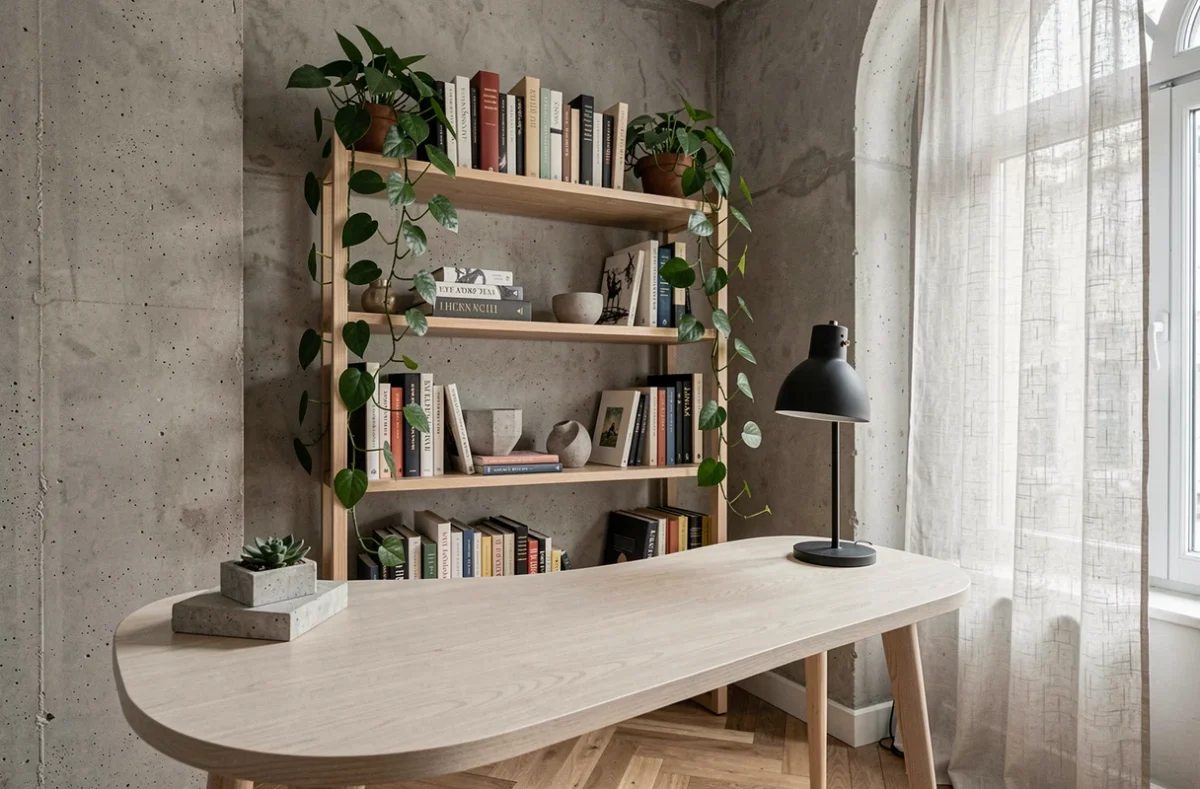
Biophilic design is no longer limited to placing a few potted plants on a shelf. Plant walls, planters integrated directly into furniture, or automatic watering systems designed during the room’s layout represent a structural evolution.
A stabilized plant wall (no maintenance) is suitable for dark rooms. A living wall requires access to water and light but improves air quality and room acoustics. The choice depends on the maintenance time you are willing to dedicate to it.
5. Earth and ochre color palette replacing gray
Dominant cool shades (pearl gray, cold off-white) are giving way to warm mineral-inspired colors: terracotta, yellow ochre, clay brown, pink sand. These tones visually warm up a space without overwhelming it.
| Palette | Light effect | Suitable rooms | Maintenance |
|---|---|---|---|
| Gray / cold white | Visually enlarges | Small rooms, hallways | Shows little |
| Terracotta / ochre | Warms, envelops | Living room, bedroom, dining room | More visible touch-ups |
| Sage green / olive | Calms, connects to nature | Office, bedroom, bathroom | Variable depending on finish |
Sage green stands out as an intermediate alternative. It combines the freshness of cool shades with the softness of natural palettes.
6. Sculptural lighting as a focal point
A designer light fixture replaces the painting or showcase object as the centerpiece of a room. Oversized washi paper pendants, black metal floor lamps with organic lines, asymmetrical wall sconces: lighting becomes a decorative element in its own right.
Multiplying light sources at different heights (floor, table, ceiling) creates distinct ambiance zones within the same space. Abandoning cold white lights in favor of diffuse, warm sources enhances this effect.
7. Reuse of materials with traceability
Reuse goes beyond the simple aesthetic practice of thrift store finds. The decree of June 10, 2022, now regulates the prior diagnosis of recoverable materials in building projects, structuring the sector.
Specifically, for interior decoration, this translates to:
- Old floorboards reused as wall cladding or table tops, with documented origins
- Architectural elements (moldings, handles, ironwork) integrated into a contemporary project to create an old-modern contrast
- Recovered construction materials (bricks, cement tiles) reused as backsplashes or flooring in dry rooms
8. Textured textiles for tactile comfort
Crumpled linen, boucle, corduroy, and boucle wool add a sensory dimension that smooth fabrics do not provide. Textured textiles transform a sofa or bed into a visual anchor without adding extra color.
A boucle throw on a linen sofa, mismatched velvet cushions, or a thick jute rug are enough to change the perception of a living room. The texture creates shadow play that enriches the room, even in a monochrome palette.
9. Handmade ceramics as decorative objects
Handmade ceramics (vases, bowls, sculptures) bring a deliberate irregularity that contrasts with industrial furniture. Each piece features variations in glaze, shape, or color that mark a return to raw materials.
Placed on a console, an open shelf, or a coffee table, handmade ceramics serve as a decorative signature of an interior. They easily combine with the earth tones and matte finishes described above.
10. Mirrors positioned to amplify natural light
The mirror remains an effective modern decoration tool, provided its placement is carefully considered. Positioned opposite a window or perpendicular to a light source, it amplifies natural brightness and visually enlarges the room.
Current formats favor rounded, asymmetrical, or arch-shaped mirrors over large rectangular ones. A floor mirror leaned against a wall creates a different depth effect than a traditional wall mirror. By combining several mirrors of varying sizes, you create a decorative wall that also serves a functional role.
Each of these ten approaches modifies a concrete parameter of your interior: light, texture, color, volume, or use. Combining two or three in the same room produces a coherent result, provided you maintain a simple guiding line. The color palette remains the most reliable thread to unify varied modern decoration choices.